
Hurricane Season Is Coming: Is Your Roof Ready in Central Florida?
In Central Florida, hurricane season has a way of showing up fast.
A quiet afternoon in Winter Garden or Clermont can quickly turn into strong winds, heavy rain, and flying debris — and when that happens, your roof is what stands between your home and serious damage.
What many homeowners don’t realize is that most roofing problems during hurricanes don’t start during the storm.
They start months earlier.
A loose shingle. Worn flashing. Minor wear from heat and humidity. Small issues that go unnoticed — until high winds expose them all at once.
That’s why April is one of the most important times to prepare your roof before hurricane season ramps up.
Why Preparing Your Roof Before Hurricane Season Matters
Central Florida’s climate is tough on roofing systems year-round.
Between intense sun exposure, high humidity, and frequent storms, roofing materials naturally wear down faster here than in many other parts of the country.
By the time hurricane season arrives, your roof may already have weak points — even if everything looks fine from the ground.
Preparing early helps you:
- Catch small issues before storms make them worse
- Reduce the risk of leaks and interior damage
- Avoid emergency repairs during peak season
- Extend the lifespan of your roof
- Feel confident your home is protected
If you’ve been considering a roof inspection in Central Florida, addressing concerns early can help you avoid urgent repairs later.
The Most Common Roofing Problems in Central Florida Homes
Most storm-related roof damage can be traced back to a handful of common issues. Knowing what to look for can help you stay ahead.
1. Aging or Damaged Shingles
Shingles are your roof’s first layer of protection — but over time, they break down.
Look for:
- Curling or lifting edges
- Cracked or brittle shingles
- Missing granules
- Uneven or discolored areas
If left unaddressed, this type of wear often leads homeowners to need roof repair services after the first major storm.
2. Loose or Failing Flashing
Flashing protects the most vulnerable areas of your roof — around vents, chimneys, and edges.
When flashing weakens, water can slowly enter your home without immediate signs.
Watch for:
- Rusted metal
- Cracked sealant
- Gaps forming
These are common causes of leaks that eventually require roof leak repair if not caught early.
3. Clogged Gutters and Drainage Issues
Your gutters are critical during heavy Florida rain.
When they’re clogged, water backs up and can seep under your shingles.
Common debris includes:
- Leaves and branches
- Pine needles
- Shingle granules
Routine maintenance — or professional help — can prevent the need for storm damage roof repair down the line.
4. Tree Damage and Debris Risk
Overhanging trees become a serious hazard during hurricane season.
Strong winds can:
- Snap branches onto your roof
- Scrape shingles over time
- Dump debris into valleys
Many homeowners end up needing emergency roof repair after storms to prevent further tree damage.
5. Hidden Moisture and Soft Spots
Some of the most serious roofing issues aren’t visible from the outside.
Moisture trapped beneath your roof can lead to structural damage over time.
Signs include:
- Interior ceiling stains
- Soft or sagging areas
- Attic humidity
These issues are often discovered during a professional roof inspection before they turn into major repairs.
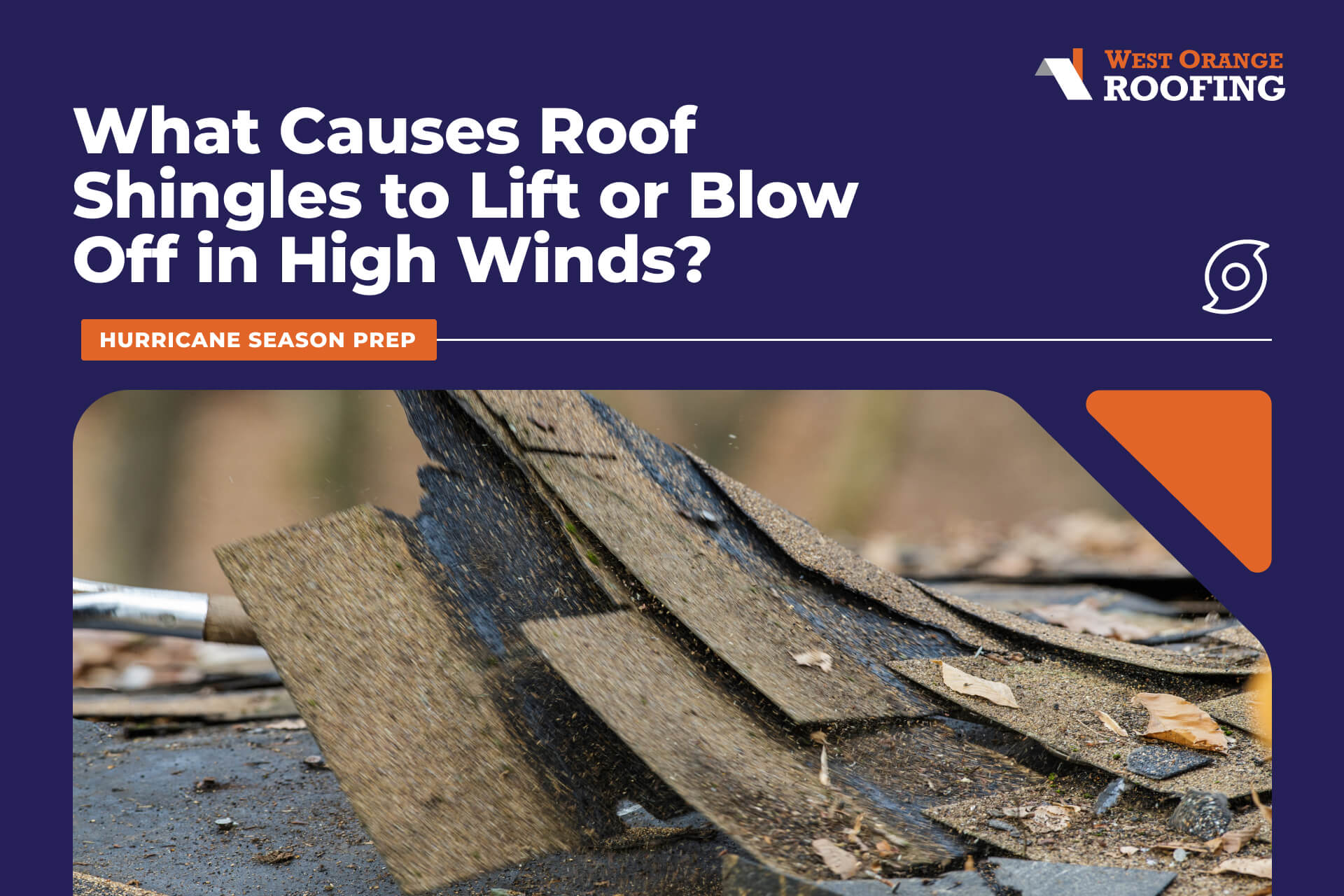
What Causes Roof Shingles to Lift or Blow Off in High Winds?
Shingles don’t just come loose randomly — there’s almost always an underlying issue.
1. Weakened Adhesive Seals
Heat and age can reduce the strength of the seal that holds shingles in place.
2. Improper Installation
Incorrect nailing or placement makes shingles far more vulnerable during storms.
3. Aging Roofing Materials
Older shingles lose flexibility and durability, making them easier to lift.
4. Previous Storm Damage
Even minor past storms can loosen shingles without obvious signs.
5. Wind Uplift Pressure
Strong winds create pressure beneath shingles, lifting them from below — especially along edges.
When this happens, it often leads to widespread damage that requires storm damage repair services.
How to Prepare Your Roof Before Hurricane Season
A few proactive steps now can prevent major issues later.
1. Inspect Your Roof From the Ground
Look for visible damage, missing shingles, or debris.
2. Clean Your Gutters and Downspouts
Proper drainage is essential during heavy rain.
3. Trim Back Nearby Trees
Reduce the risk of impact damage during storms.
4. Take Care of Minor Repairs Early
Small issues can quickly turn into major problems under high winds.
5. Have Your Roof Professionally Evaluated
A detailed evaluation can uncover hidden issues before they worsen.
If you’re unsure where your roof stands, it’s worth reaching out to a local roofing professional for guidance.
When Should You Take Action?
The best time to address roofing concerns is before hurricane season begins.
Once storms start hitting Central Florida, many homeowners are competing for emergency services, which can mean delays when you need help most.
Getting ahead of the season gives you:
- Time to plan repairs if needed
- Better scheduling availability
- Confidence that your home is protected
Homeowners across Winter Garden, Orlando, Clermont, and surrounding areas benefit most from acting early.
Protect Your Home Before the Next Storm Hits
Hurricane season is coming — and your roof plays a critical role in protecting your home and family.
The good news is that most major roofing issues can be prevented with early attention and the right guidance.
At West Orange Roofing, we help homeowners across Central Florida with everything from inspections to repairs and storm damage assessments — all with a focus on honest recommendations and dependable service.
If you’ve noticed signs of wear — or just want peace of mind heading into storm season — now is the time to take the next step.
Contact our team today to get expert insight into your roof’s condition and make sure your home is ready before the next storm arrives.