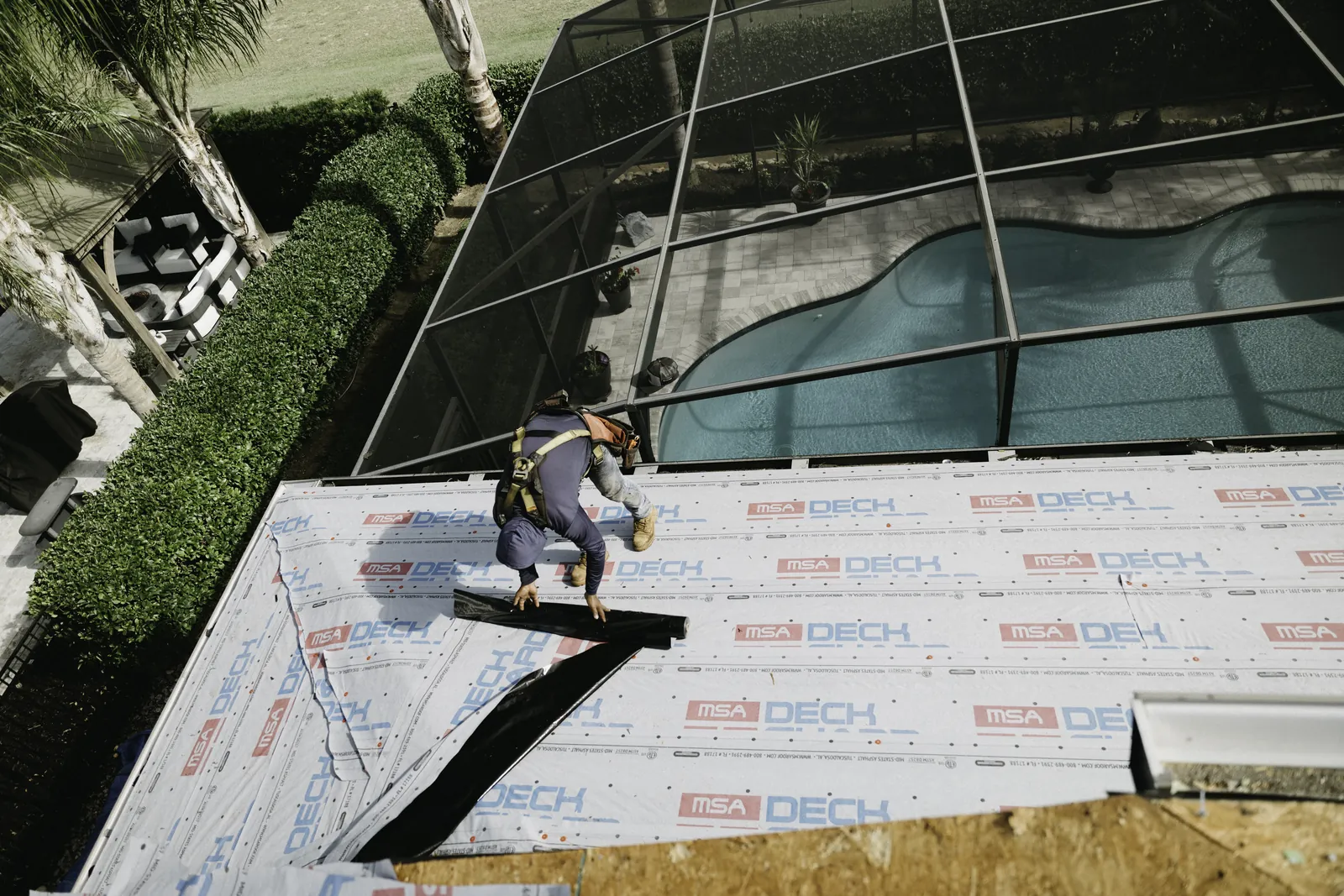
Florida spring storms can bring heavy rain, lightning, wind, and fast-changing conditions. The useful preparation is not a risky last-minute roof project: it is a calm review of known concerns, safe drainage maintenance, outdoor cleanup, and a record of the roof’s condition before the season becomes active. Start while weather is calm and access decisions are not urgent.
Make a dry-day checklist
From the ground, photograph each roof slope, gutters, soffits, and any area with a prior repair. Inside accessible attic areas, note existing stains, damp insulation, or daylight without stepping on framing or insulation. Save the date with repair invoices and previous reports. A baseline does not prove a cause after a storm, but it makes changes easier to describe.
Address known concerns before weather arrives
Clear leaves from reachable gutters and downspouts only when the work can be done safely. Have an appropriate professional address branches that touch or threaten the roof. Contact a roofer about recurring leaks, loose-looking materials, flashing concerns, or damaged roof edges rather than waiting for rain to test them.
Plan for the storm, not on the roof
Bring in loose outdoor items, know where safe interior water-containment supplies are stored, and keep a contractor contact number with home records. Avoid climbing ladders, walking a roof, or applying makeshift patches as storms approach. If a new leak appears, protect people and belongings first, document it when safe, and arrange an evaluation after hazardous conditions pass.
A practical next step
Use a calm weather window to request an evaluation through West Orange Roofing’s residential services if you have a known concern. For broader seasonal planning, read the hurricane roof checklist before conditions become unsafe.
Related reading: How to Prevent Roof Leaks During Florida's Rainy Season | How to Prepare Your Roof for Hurricane Season in Florida.