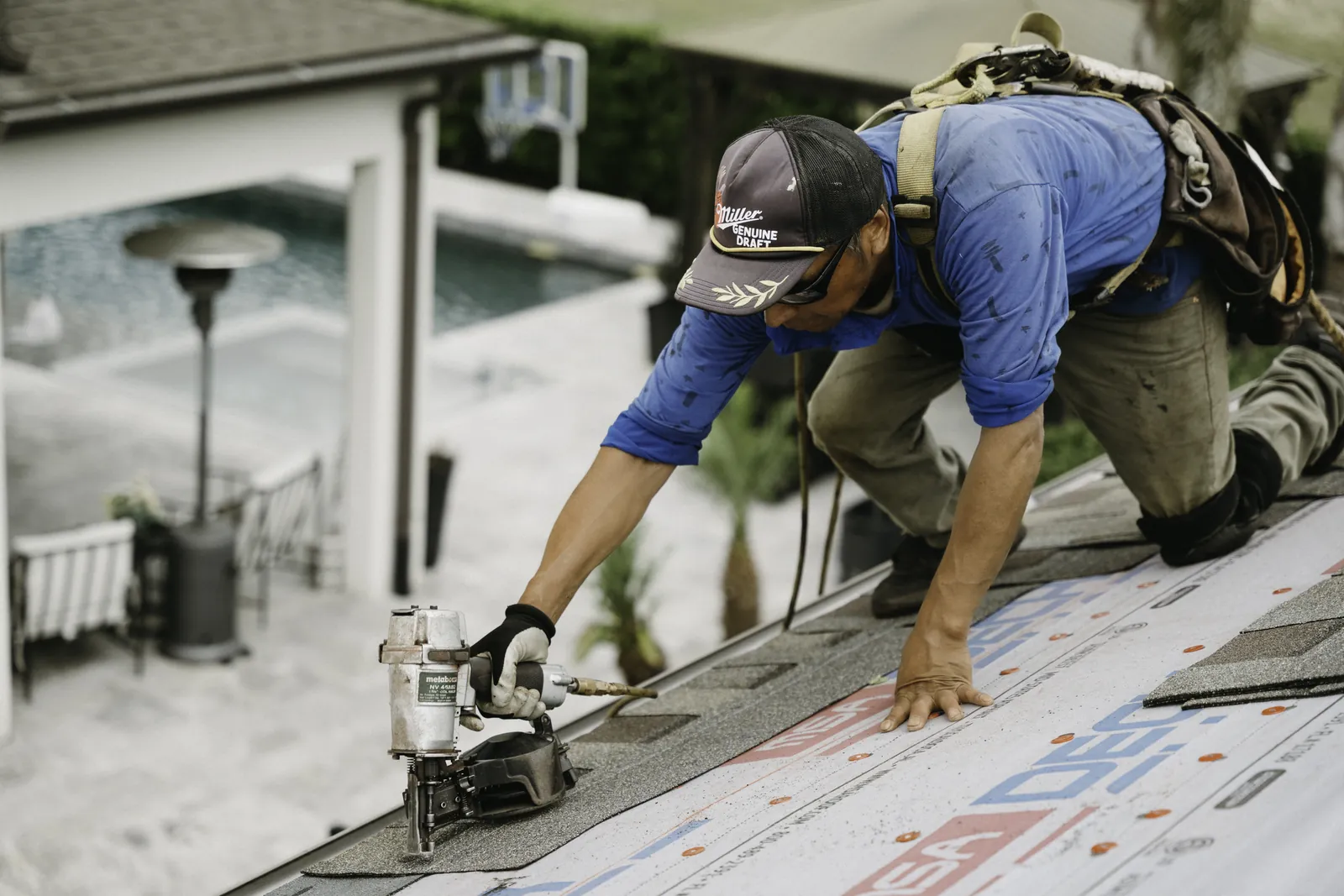
Before a hurricane, inspect what you can safely see from the ground and from accessible interior spaces, then arrange professional help for concerns that require roof access. Check for displaced shingles or tiles, loose metal edges or flashing, debris in gutters, branches contacting the roof, and damaged soffits. In the attic, look for new stains, damp insulation, daylight, or a musty odor. Photograph visible conditions and save earlier inspection or repair records. Clear reachable drainage paths and secure loose outdoor items. Do not walk the roof, climb ladders in worsening weather, or try to fasten materials once conditions are unsafe. The goal is a documented baseline and timely maintenance, not a do-it-yourself certification.
Exterior checklist from solid ground
- Look for missing, lifted, cracked, or displaced roof materials.
- Check eaves, gutters, downspouts, and visible flashing for debris or loose sections.
- Identify limbs touching the roof and outdoor objects that wind could carry.
- Photograph each roof side, including any existing wear or repaired area.
Interior checklist
Use a flashlight in accessible attic areas without stepping on ceiling framing or insulation. Note water marks, wet insulation, daylight, sagging material, and odors. Check ceilings around prior leak locations as well. A stain does not identify the entry point, but it is important context for an assessment.
When to call for help
Contact a roofing professional before the storm if materials are loose, flashing appears displaced, or a leak has occurred. If a storm is already creating hazardous conditions, stay indoors and prioritize personal safety. Wait for safe conditions before documenting new damage or arranging evaluation.
A practical next step
Before committing to work, request a written evaluation and compare it with the questions you still have. West Orange Roofing has served Central Florida since 1978 and can discuss residential roofing services, a free roofing quote, and the warranty and financing information. Financing, when available for qualifying residential customers through Sunlight Financial, is subject to credit approval and changing program terms. For broader homeowner questions, visit the roofing FAQ.
Related reading: What Should You Do If Your Roof Is Damaged During a Hurricane? | What to Do if a Tree Falls on Your Roof.
Frequently asked questions
Should gutters be included in a hurricane roof checklist?
Yes. Reachable gutters and downspouts should be clear enough to move water as intended. Do not attempt cleanup from an unsafe ladder or during deteriorating weather.
What if I find a loose shingle before a hurricane?
Document it from the ground and contact a qualified roofer promptly. Avoid climbing up or using temporary fasteners yourself, particularly if wind or rain is approaching.
Is an attic check necessary?
An accessible attic check can reveal prior moisture, daylight, or staining that may not be visible outside. It complements, rather than replaces, a roof inspection.
Does completing this checklist certify that a roof is hurricane ready?
No. It is a homeowner observation checklist, not a certification, wind-mitigation form, or promise of storm performance.