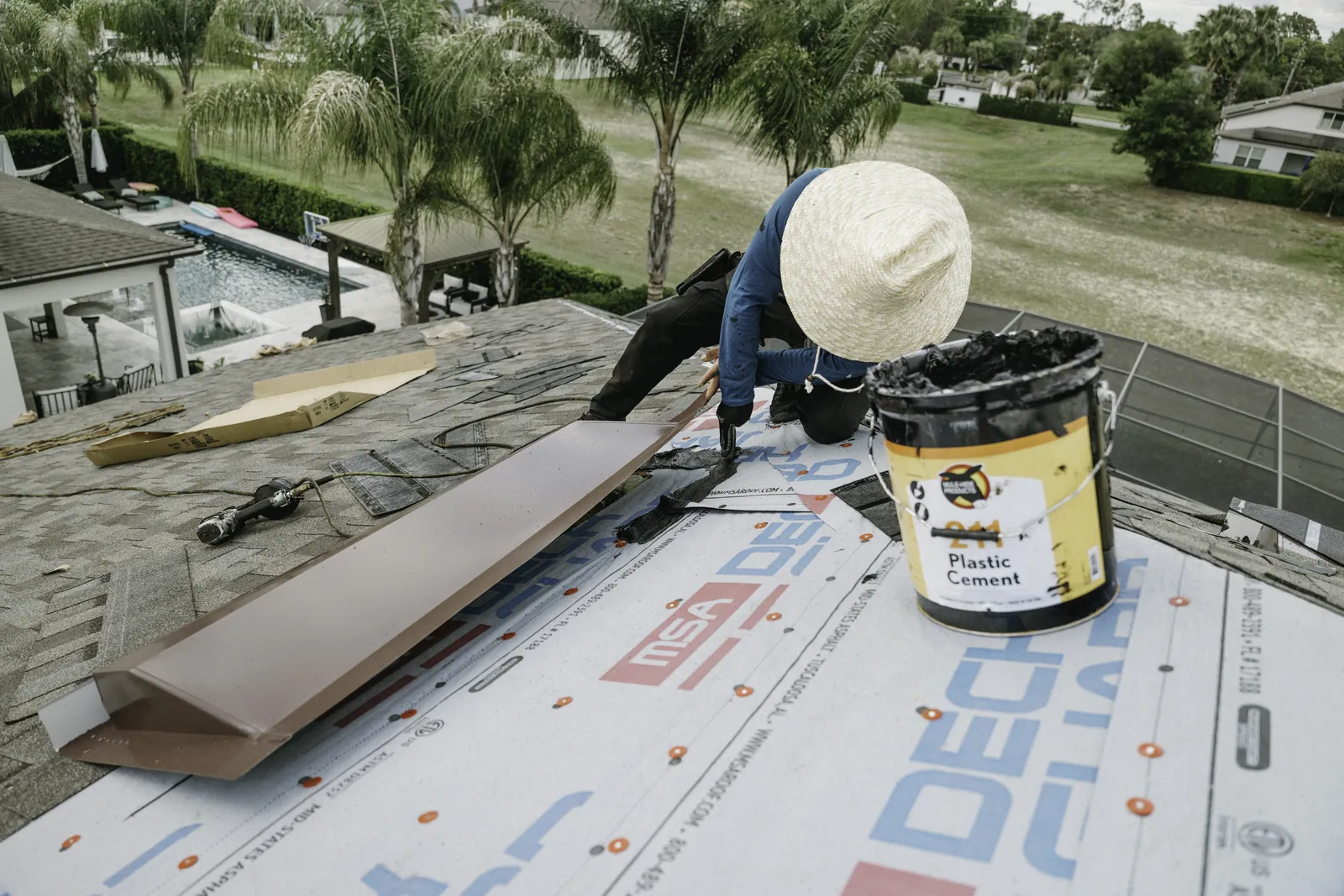
A metal-roof leak can begin at a penetration, flashing, seam, fastener, roof edge, transition, drainage area, or a detail affected by movement over time. The ceiling stain or drip may appear away from the actual entry point, so a durable repair starts with tracing the water path and evaluating the surrounding assembly—not with a guessed surface coating.
Look beyond the metal panel field
Vents, pipes, skylights, walls, valleys, and roof edges interrupt the broad metal surface. Their boots, flashings, sealants, closures, and adjoining panels must be compatible and properly detailed. A loose-looking sealant bead may be a clue, but it does not confirm the root cause without looking at how water is being directed around the feature.
Movement and fastening need context
Metal roofing expands and contracts as temperatures change. Panels and accessories are designed with specific fastening and connection details, and an inappropriate repair can interfere with that design. Missing, damaged, corroded, or improperly placed fasteners may need attention, but homeowners should not tighten or seal them from the roof without guidance.
Document the pattern safely
Note where and when interior moisture appears, whether it follows wind-driven rain, and which room is affected. Photograph the roof from the ground, the ceiling area, and accessible attic clues. Avoid walking a metal roof, which can be slippery and can damage panels. A professional evaluation can connect the interior symptom to penetrations, seams, transitions, drainage, and the condition of nearby materials.
A practical next step
For an active metal-roof leak, protect people and belongings safely and request a focused roof repair evaluation. For terminology that can help you read the findings, see roof layers and terms explained.
Related reading: Metal Roof vs. Shingles in Florida: Which Is Better? | The Most Common Causes of Roof Leaks in Florida.