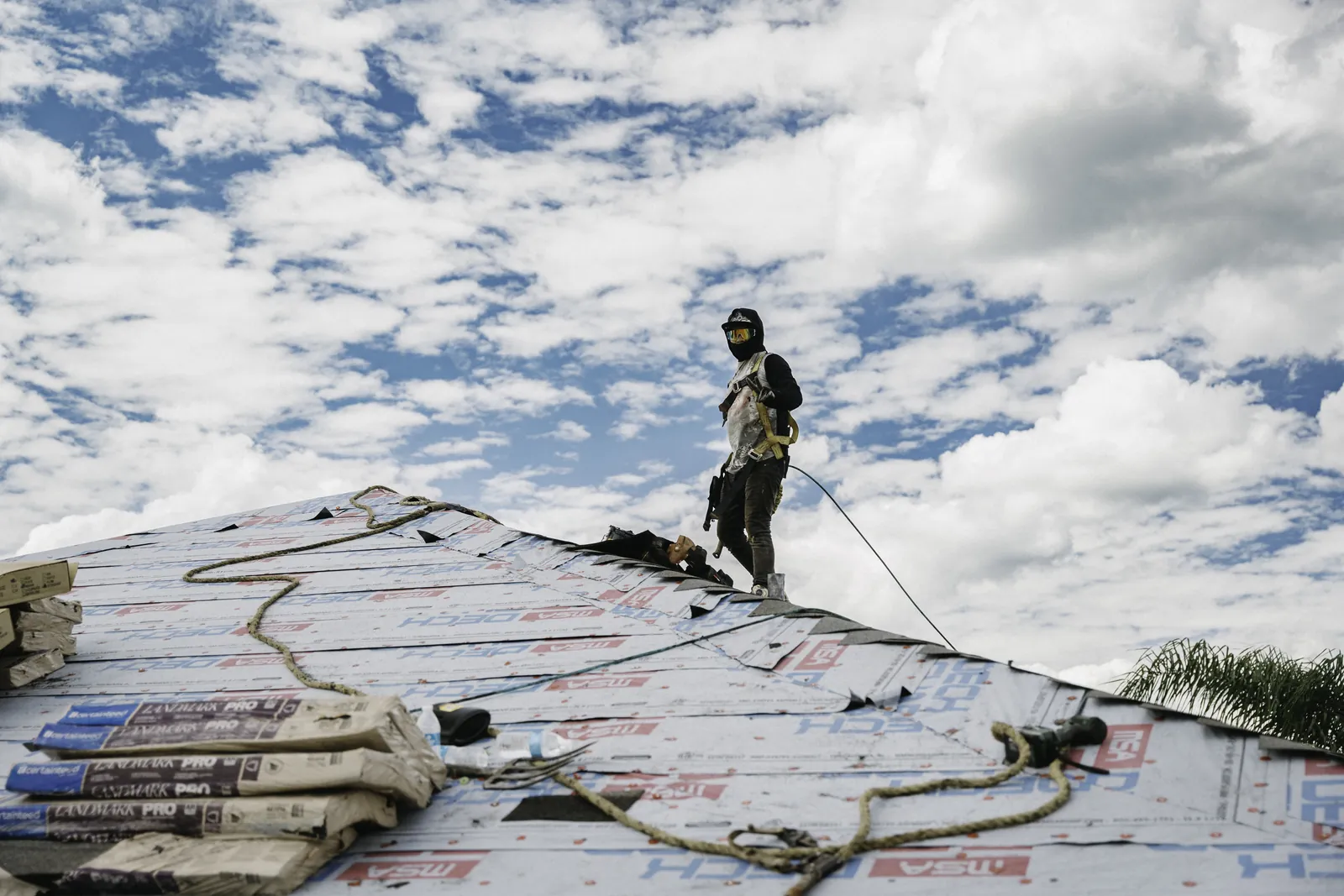
A roof is a layered water-management system, not just shingles, tile, or metal panels. The visible covering works with the deck, underlayment, flashings, roof edges, ventilation details, and penetrations. Learning a few terms helps homeowners read a proposal and ask whether the complete assembly—not only the surface material—fits the home.
The layers below the visible covering
The roof deck is the structural surface that supports the roofing system. Underlayment is a protective layer installed above the deck and below the covering. The covering may be shingles, tile, metal, or another approved material. A proposal should explain what happens if the exposed deck needs repair once existing materials are removed.
The details that direct water
Flashing is shaped material used where the roof meets a wall, valley, chimney, skylight, or other transition. A pipe boot or penetration flashing helps manage water around vents and pipes. Drip edge is roof-edge metal that helps guide water away from vulnerable edge areas. These components need to work with the covering and underlayment; a stain inside does not by itself identify which one has failed.
Terms to use when comparing a scope
Ask the contractor to identify the roof covering, underlayment, flashing work, edge details, ventilation approach where applicable, removal and disposal, deck-evaluation process, and warranty documents. Product names alone do not describe the full assembly. Keep the written scope and any approved changes with home records so future repairs can start with accurate information.
A practical next step
Use this vocabulary to compare a complete written scope with a roofing professional through West Orange Roofing’s residential services. Then review the roofing warranty guide with the project documents rather than relying on a product name alone.
Related reading: How to Choose the Right Roofing System for Your Home | Why Is My Roof Leaking Around a Vent, Chimney, or Skylight?.
Frequently asked questions
What is underlayment?
Underlayment is a protective layer installed between the roof deck and the visible covering. Its type and installation details should be specified in the project scope.
Why is flashing important?
Flashing helps direct water where roof surfaces meet walls, valleys, and penetrations. It is one part of a coordinated system rather than a stand-alone leak cure.
Can I compare roof proposals by shingle or panel name alone?
No. Compare the complete written scope, including removal, deck procedures, underlayment, flashing, roof edges, ventilation where applicable, cleanup, and warranty documents.