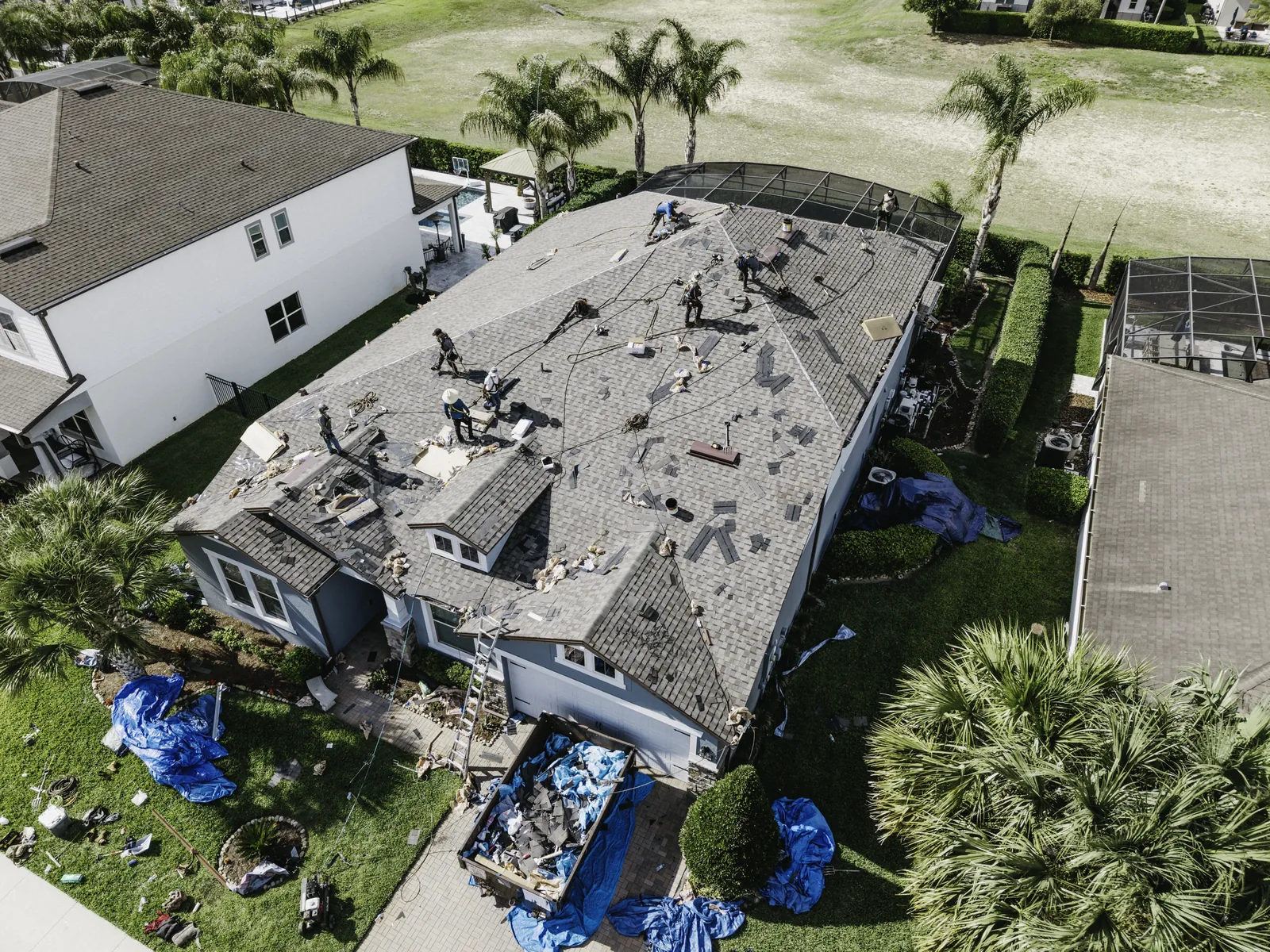
Check your roof after a hurricane from the ground and inside accessible attic spaces, not by climbing onto the roof. Look for missing, lifted, creased, cracked, or displaced shingles or tiles; bent or loose flashing; debris impacts; and material along the yard or gutters. Indoors, look for fresh ceiling stains, damp insulation, daylight, dripping, or new odors. Take dated photos of what you can safely see and compare them with pre-storm records. If you find changes, an active leak, or significant debris, arrange a professional assessment. A close inspection can distinguish visible storm-related conditions from older wear and identify details that are not safely visible from the ground.
Start at the perimeter
Walk around the home after authorities indicate conditions are safe. Photograph each roof slope from several angles, then note debris, fallen branches, damaged gutters, loose soffit material, and fragments of roofing. Do not collect evidence by climbing onto the roof or walking beneath unstable trees.
Check from inside
Inspect ceilings and accessible attic areas with a flashlight. Look for fresh staining, moisture, wet insulation, daylight at roof penetrations, and drip paths. Mark the room and approximate location in your notes. Water can travel before appearing indoors, so this does not prove the point of entry.
Make the follow-up useful
Share dated photos, the storm date, prior repair records, and a list of observed changes with the roofing professional. Ask for findings that separate observed conditions, suspected sources, and any need for temporary protection or further investigation. Keep the written assessment with your home records.
A practical next step
Before committing to work, request a written evaluation and compare it with the questions you still have. West Orange Roofing has served Central Florida since 1978 and can discuss residential roofing services, a free roofing quote, and the warranty and financing information. Financing, when available for qualifying residential customers through Sunlight Financial, is subject to credit approval and changing program terms. For broader homeowner questions, visit the roofing FAQ.
Related reading: Wind Damage to a Roof: What Does It Look Like? | The Most Common Causes of Roof Leaks in Florida.